
Shigatse is the second-largest city in Tibet, and it boasts significant monasteries, ancient fortresses, and vibrant markets. The city is surrounded by stunning landscapes, including majestic mountains and scenic valleys. Shigatse provides a perfect blend of cultural exploration and natural beauty, making it a must-visit destination in Tibet.
Quick Facts about Shigatse
- Population: Approximately 100,000 residents.
- Elevation: Around 3,800 meters (12,500 feet).
- Climate: High-altitude climate with cold winters, cool summers, and significant temperature variations between day and night.
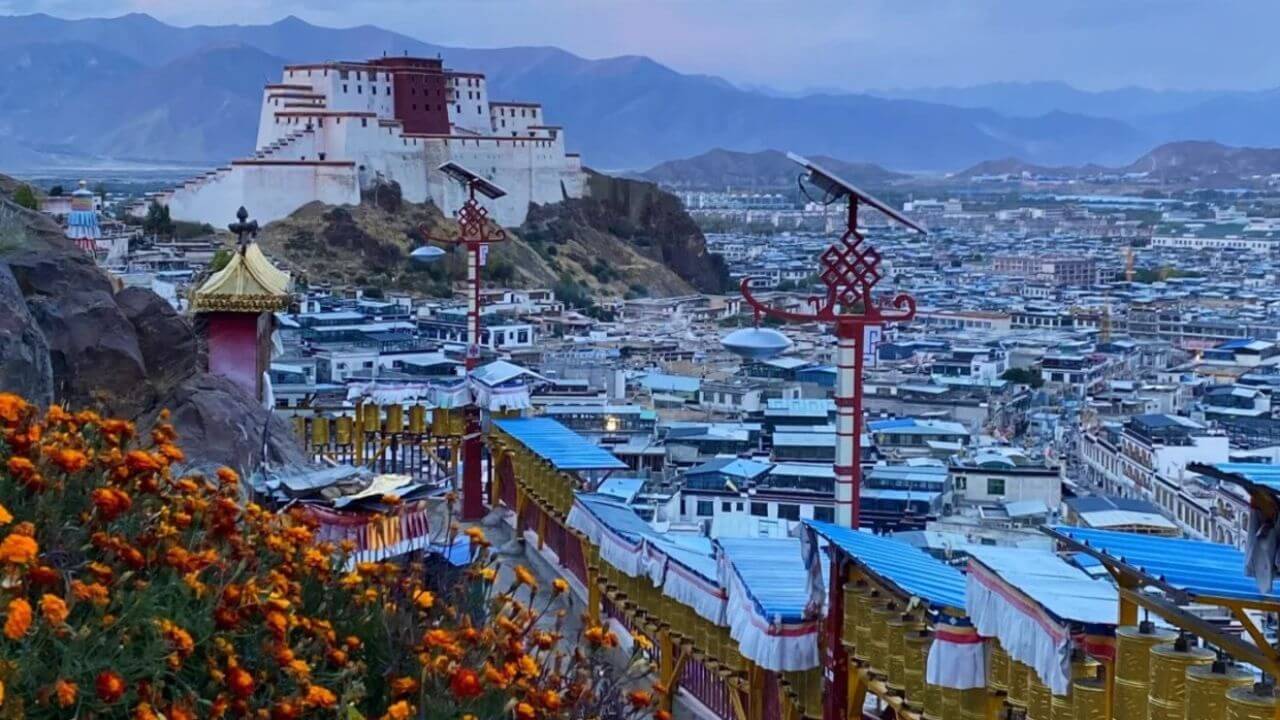
Tashilhunpo Monastery
Tashilhunpo Monastery is one if the most historically and cilturally significant monasteries in Tibet. It is founded in 1447 by the first Dalai Lama, Gedun Drub and it’s located in Shigatse. Tashihunpo Monastery serves as the traditional seat of the Panchen Lama, the second-highest ranking lama in Tibetan Buddhism. The monastery’s name means “Heap of Glory” in Tibetan, reflecting its grandeur and spiritual importance.
Highlights
The Maitreya Buddha Statue
One of the most remarkable features of Tashilhunpo Monastery is the Maitreya Buddha statue. It is status with over 26 meters heigh, and this gold-plated statue is one of the largest indoor statues in the world. It was constructed in 1914 by the Ninth Panchen Lama and is adorned with precious metals and gems.
The statue represents Maitreya, the future Buddha, symbolizing hope and the future of humanity in Buddhist belief.
Tombs of the Panchen Lamas
The monastery houses the magnificent tombs of the Panchen Lamas, including the Fourth Panchen Lama, whose tomb is decorated with gold and precious stones. These tombs are elaborate and serve as a place of pilgrimage for Buddhists.
The tombs highlight the monastery’s historical and religious significance as the seat of the Panchen Lamas.
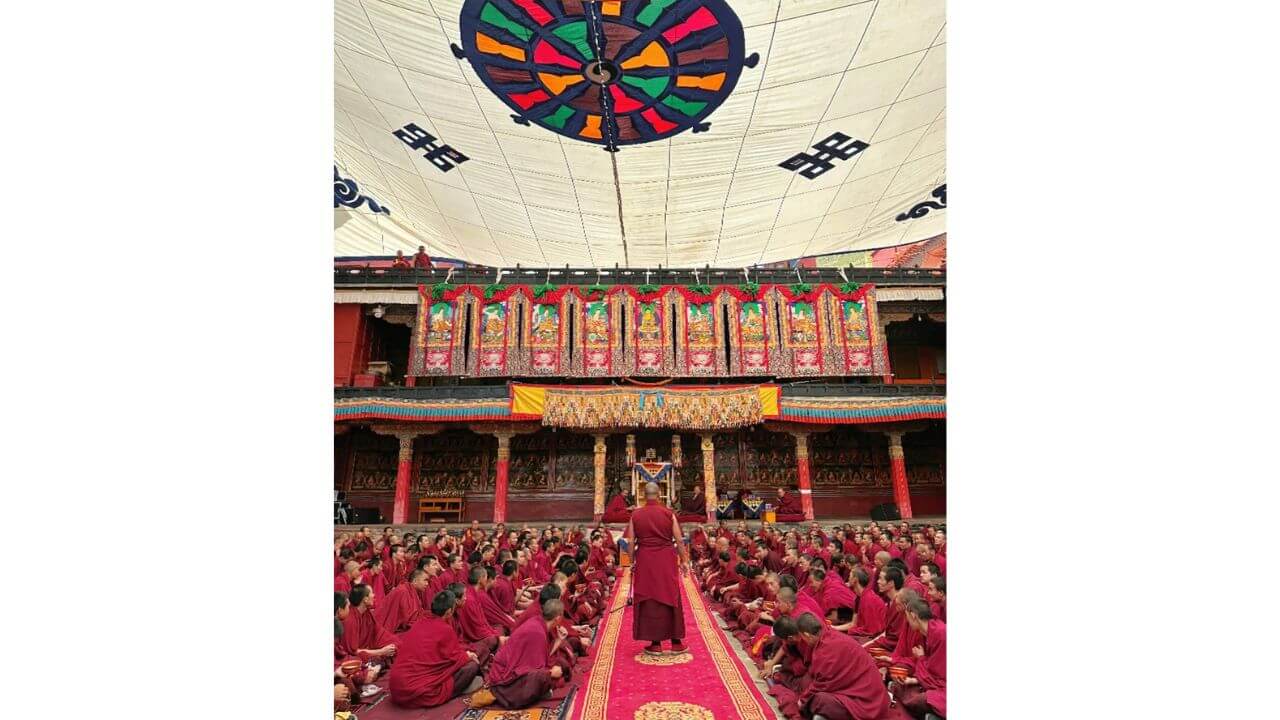
Prayer Halls and Stupas
The monastery complex includes several prayer halls and stupas, each with unique architectural and artistic features. The grand assembly hall, known as Tsochin Hall, is a focal point for religious activities and ceremonies.
These structures are central to the religious life of the monastery, hosting daily prayers, rituals, and teachings.
Monastic Community
Tashilhunpo Monastery is home to a vibrant monastic community. Monks here engage in religious study, meditation, and various rituals. The monastery also runs a monastic school where young monks receive their education.
The monastic community plays a crucial role in preserving Tibetan Buddhist traditions and teachings.
Best Time to Visit
- Spring (April to June): This is one of the best times to visit Tashilhunpo Monastery as the weather is mild and pleasant, making it ideal for exploring the monastery and its surroundings.
- Autumn (September to October): Another favorable period with clear skies and comfortable temperatures, perfect for sightseeing and photography.
- Festivals: Visiting Tibetan festivals, such as the Tashilhunpo Thangka Unveiling Festival, can provide a deeper insight into Tibetan culture and religious practices.
Tips
Altitude: Tashilhunpo Monastery is situated at a high altitude, so it’s important to acclimatize properly and stay hydrated.
Permits: Foreign travelers need a Tibet Travel Permit to visit Shigatse and Tashilhunpo Monastery.
Respect Local Customs: When visiting the monastery, dress modestly, be respectful of religious practices, and ask for permission before taking photographs of monks or religious ceremonies.
The tombs highlight the monastery’s historical and religious significance as the seat of the Panchen Lamas.
Shigatse Dzong (Shigatse Fort)
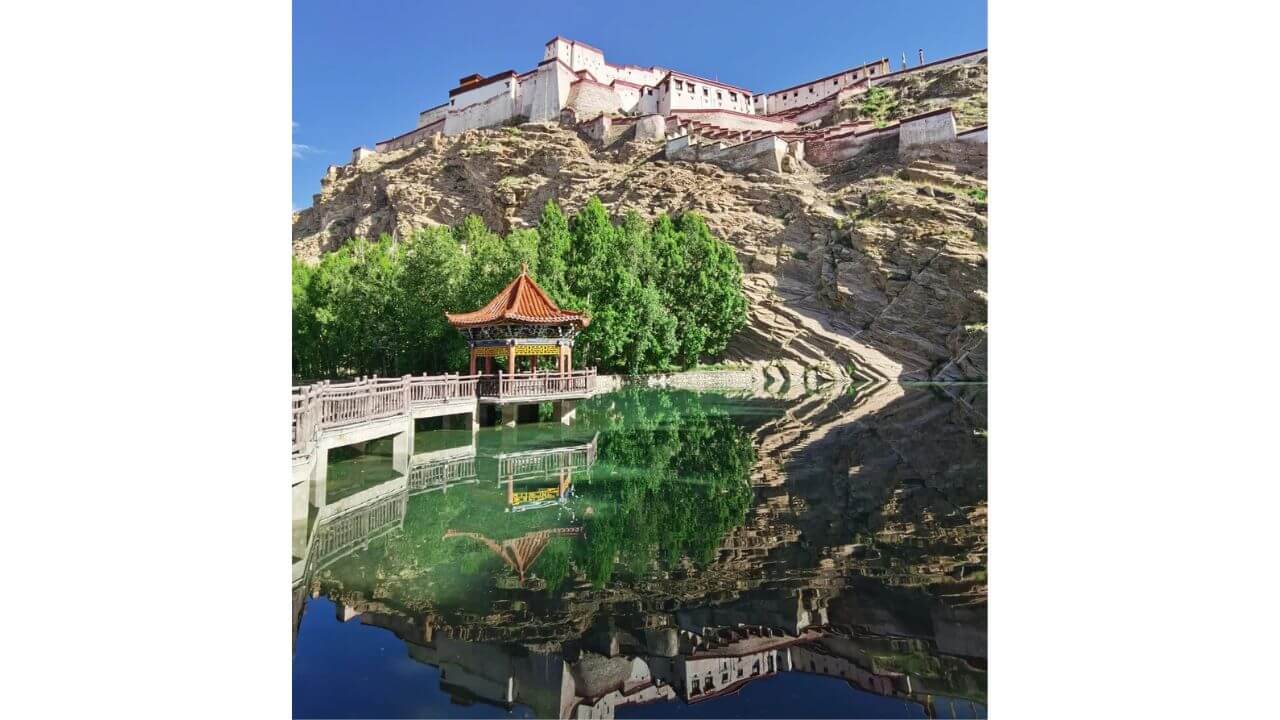
Shigatse Dzong, also known as Shigatse Fort, is a historic fortification situated in the city of Shigatse. Perched atop a hill, the fort offers panoramic views of the city and the surrounding landscapes. Although much of the original structure was destroyed during the Cultural Revolution, it has been partially rebuilt, allowing visitors to appreciate its historical significance and architectural grandeur.
Highlights
Stunning Views
One of the main attractions of Shigatse Dzong is the breathtaking views it offers. From the fort, visitors can enjoy sweeping vistas of Shigatse city, the fertile plains of the Nyang Chu River, and the distant Himalayan peaks. The views from the fort provide a unique perspective of the region’s natural beauty and the strategic importance of the fort’s location.
Historical Insight
Shigatse Dzong was originally built in the 17th century by the local ruler, Karma Phuntsok Namgyal. It served as a military stronghold and administrative center, playing a crucial role in the region’s history. The fort’s architecture reflects traditional Tibetan design and construction techniques.
Visiting the fort allows travelers to delve into the history of Shigatse, understanding its past as a center of power and its role in Tibetan governance and defense.
Reconstruction Efforts
Although much of Shigatse Dzong was destroyed, the fort has been partially rebuilt to preserve its historical legacy. The reconstruction efforts aim to restore its original splendor while making it accessible to visitors.
The reconstructed sections of the fort offer a glimpse into the past, showcasing traditional Tibetan architecture and craftsmanship.
Best Time to Visit
- Spring (April to June): The weather during spring is mild and pleasant, making it an ideal time to explore the fort and enjoy the views.
- Autumn (September to October): With clear skies and comfortable temperatures, autumn is another great time to visit Shigatse Dzong. The visibility is excellent, enhancing the panoramic vistas from the fort.
- Festivals: Visiting during local festivals can enhance the experience, offering a deeper insight into Tibetan culture and traditions.
Rongbuk Monastery
Rongbuk Monastery, located near the north base camp of Mount Everest in Tibet, holds the distinction of being the highest monastery in the world. Situated at an altitude of approximately 4,980 meters (16,340 feet), this monastery offers unparalleled views of the north face of Mount Everest. Established in the early 20th century, Rongbuk Monastery is a site of immense spiritual significance for Tibetan Buddhists and a vital stop for adventurers heading to Everest.
What you will see at Rongbuk Monastery
The Monastery Itself
Rongbuk Monastery was founded in 1902 by the Nyingma sect of Tibetan Buddhism. Despite its remote location, the monastery is an important spiritual center, housing monks and nuns who live and practice their faith in this extreme environment. The simple yet profound architecture reflects the traditional Tibetan style, and the monastery includes prayer halls, meditation rooms, and living quarters.
The monastery’s spiritual ambiance, coupled with its historical significance, makes it a place of pilgrimage for Buddhists and an intriguing destination for travelers.

Spectacular Views of Mount Everest
One of the primary attractions of Rongbuk Monastery is the breathtaking view it offers of Mount Everest. The north face of the world’s highest peak can be seen clearly from the monastery, providing a stunning backdrop for both meditation and photography. The sight of Everest from this vantage point is particularly striking during sunrise and sunset, when the mountain is bathed in golden light.
The views from Rongbuk Monastery are among the most iconic and awe-inspiring in the world, drawing adventurers, photographers, and spiritual seekers alike.
Best Time to Visit
- Spring (April to June): This is one of the best times to visit Rongbuk Monastery, as the weather is relatively mild and the skies are often clear, providing excellent visibility of Mount Everest.
- Autumn (September to October): Another ideal period for visiting, autumn offers clear skies and moderate temperatures, making it perfect for both trekking and photography.
- Avoid Winter (November to March): Due to extreme cold and heavy snowfall, winter is not recommended for visiting Rongbuk Monastery.
Sakya Monastery
Sakya Monastery, often referred to as the “second Dunhuang,” is renowned for its extensive collection of Buddhist scriptures, murals, and artifacts. Located in Sakya County, Shigatse Prefecture, Tibet, this monastery serves as the principal monastery of the Sakya sect of Tibetan Buddhism, which played a pivotal role in Tibetan history. The monastery is divided into two sections: the Northern Monastery, mostly in ruins, and the Southern Monastery, which remains active and vibrant.
Highlights
Unique Mongolian Architecture
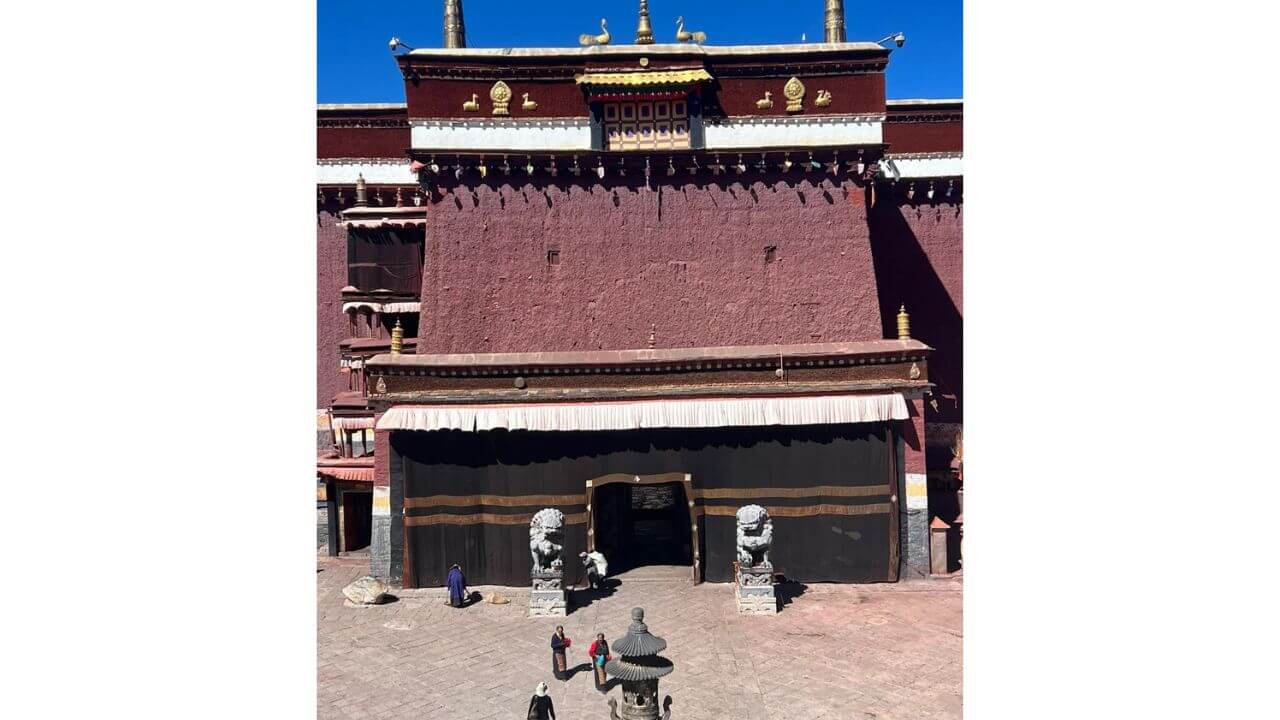
Sakya Monastery stands out with its unique architecture that blends Tibetan and Mongolian styles. The Southern Monastery, in particular, features massive fortress-like walls painted in red, white, and grey stripes, symbolizing the three Bodhisattvas. The architecture reflects both the spiritual significance and the historical influences that have shaped the monastery over the centuries.
The distinct architectural style of Sakya Monastery not only represents its religious importance but also its historical connections with the Mongol Empire and its role in Tibetan politics.
Massive Collection of Tibetan Buddhist Texts
Sakya Monastery houses one of the most extensive collections of Tibetan Buddhist scriptures, including over 84,000 manuscripts. Among these are rare and precious texts such as the “Burde Gyaimalung” and the “Sakya Legshe.” The monastery’s library is a treasure trove of knowledge, encompassing scriptures, commentaries, and historical documents.
The vast collection of texts at Sakya Monastery is invaluable for the study of Tibetan Buddhism, offering insights into religious teachings, historical events, and cultural practices.
Murals and Artifacts
The walls of Sakya Monastery are adorned with intricate murals depicting various Buddhist deities, historical figures, and religious narratives. These murals are considered masterpieces of Tibetan art. Additionally, the monastery houses numerous artifacts, including statues, thangkas (Tibetan scroll paintings), and ritual objects.
The murals and artifacts at Sakya Monastery provide a visual and tangible connection to Tibetan Buddhism’s rich artistic and cultural heritage.
Best Time to Visit
- Spring (April to June): The weather during spring is mild and pleasant, making it an ideal time to explore the monastery and its surroundings.
- Autumn (September to October): Another favorable period with clear skies and comfortable temperatures, perfect for sightseeing and photography.
- Festivals: Visiting during Tibetan festivals can provide a deeper insight into the local culture and religious practices. The annual “Sakya Monlam Chenmo” (Great Prayer Festival) is a particularly significant event.
Gyantse Kumbum
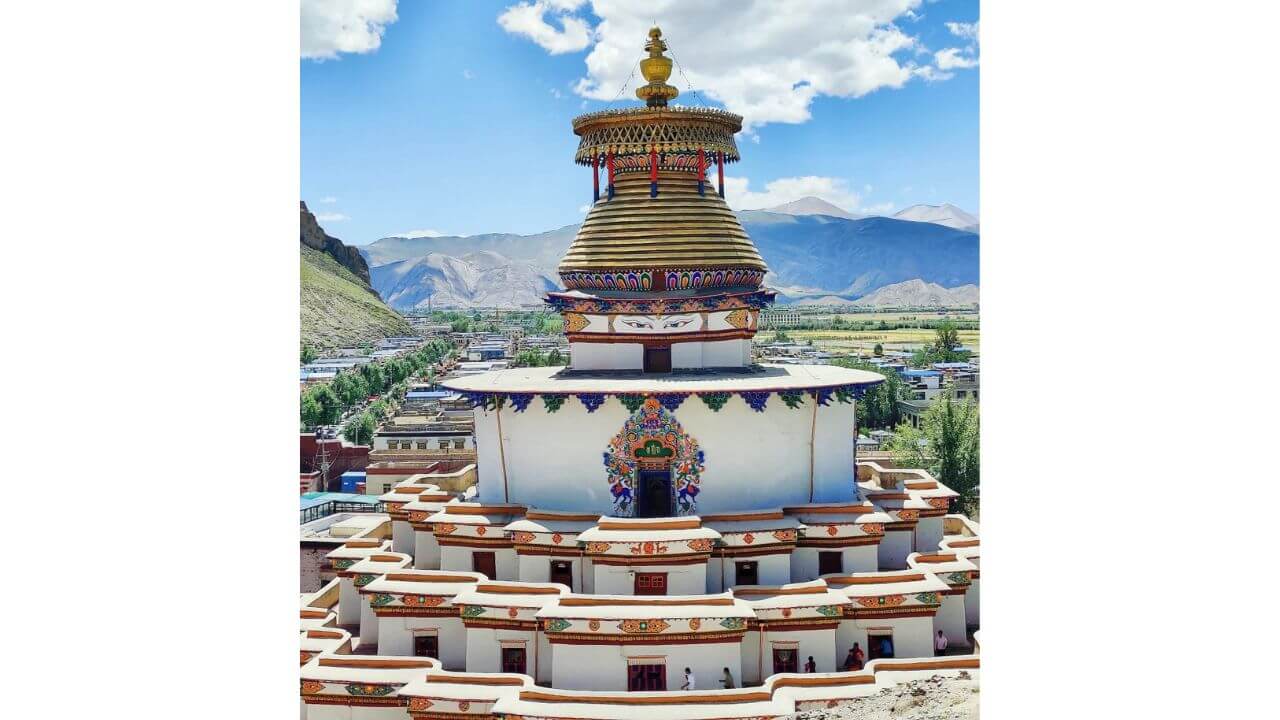
Located in Gyantse, near Shigatse in Tibet, the Gyantse Kumbum is a remarkable stupa renowned for its architectural splendor and artistic richness. “Kumbum” means “100,000 images” in Tibetan, aptly describing this multi-storied structure that houses numerous chapels adorned with stunning murals and statues. The Kumbum is part of the Pelkor Chode Monastery complex, making it an important site for religious worship and cultural heritage.
Why visiting Gyantse Kumbum
Intricate Artwork
The Gyantse Kumbum is celebrated for its exquisite murals and statues. Each of the nine tiers of the stupa contains chapels filled with intricate paintings and sculptures depicting various Buddhist deities, historical figures, and religious narratives. The artistry of these murals and statues is a testament to the high level of craftsmanship achieved by Tibetan artists.
The detailed artwork offers deep insights into Tibetan Buddhist iconography and serves as a visual representation of religious teachings and cultural stories.
Panoramic Views of Gyantse
Climbing to the top of the Gyantse Kumbum provides visitors with breathtaking panoramic views of the town of Gyantse and the surrounding landscape. The elevated vantage point offers a unique perspective of the region’s natural beauty and historical architecture.
The views from the top are not only visually stunning but also provide a sense of the strategic importance of Gyantse in Tibetan history.
Architectural Marvel
The Kumbum’s architecture is a fusion of Han, Tibetan, and Nepali styles, reflecting the cultural exchanges that have influenced Tibetan art and architecture. The stupa’s design, with its ascending layers and numerous chapels, is both complex and harmonious, making it a significant example of religious architecture.
The architectural design of the Kumbum highlights the blending of different artistic traditions and the importance of religious structures in Tibetan culture.
Best Time to Visit
- Spring (April to June): The weather is mild and pleasant, making it an ideal time to explore the Kumbum and enjoy the surrounding scenery.
- Autumn (September to October): Another favorable period with clear skies and comfortable temperatures, perfect for sightseeing and photography.
- Festivals: Visiting local festivals, such as the Gyantse Horse Racing Festival, can provide a deeper insight into the cultural traditions of the region.

Helen Wang
Travel Advisor & Guide Expert
I started my travel career in 2005 and have since become an expert in Tibet and China’s travel destinations and helping travelers plan unforgettable trips.
For expert travel advice to China or Tibet, feel free to contact me.