
If you are more into exploring the Sacred China then in this China travel Guide I have some suggestions for you to consider add in your list of attractions worth visiting. China has a rich tapestry of religions and spiritual traditions, so with that offers a multitude of sacred destinations that attract pilgrims and tourists alike. These places not only provide spiritual solace but also offer a glimpse into the country’s profound cultural and historical heritage.
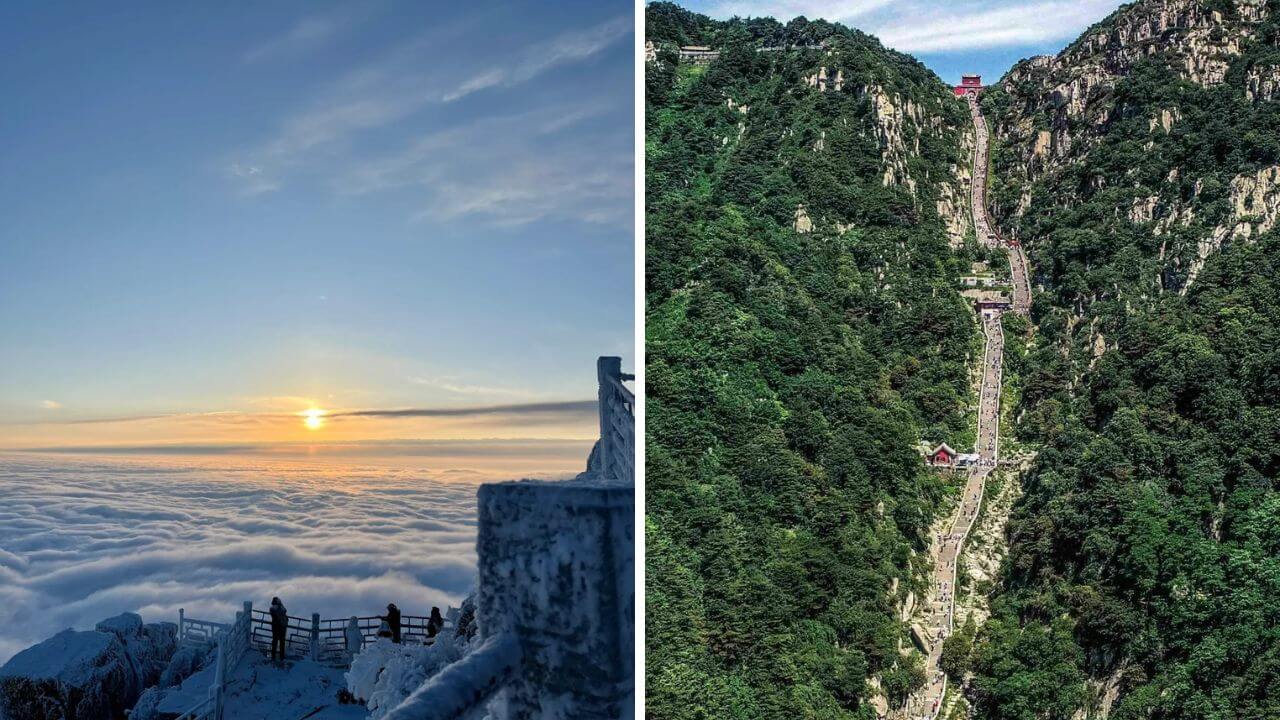
Mount Tai (Taishan)
When you explore sacred China first stop you should have at Mount Tai. Mount Tai is one of the Five Great Mountains of China, it has been a sacred site for over 3,000 years. It is associated with sunrise, birth, and renewal, and has been a pilgrimage destination for emperors and ordinary people alike.
- Location: Shandong Province
Spiritual Significance
- Connection with Heaven and Earth: Mount Tai is believed to be the center of the world in Chinese cosmology. It’s thought to be a place where heaven and earth meet, making it a sacred site for connecting with divine forces.
- Seeking Blessings and Protection: Many pilgrims climb Mount Tai to seek blessings, good fortune, and protection from the gods. The mountain is home to numerous temples, shrines, and altars dedicated to various deities, including the Jade Emperor, who is believed to rule over heaven.
- Symbol of Renewal and Rebirth: The difficult climb to the top of Mount Tai symbolizes overcoming challenges and personal transformation. Reaching the summit is seen as a spiritual renewal, where one can leave behind past misfortunes and start anew.
- Paying Homage to Ancestors: Pilgrims often visit Mount Tai to honor their ancestors. The mountain is associated with filial piety and the veneration of ancestors, which are important aspects of Confucianism.
- Imperial Worship: Historically, Chinese emperors held grand ceremonies at Mount Tai to show their divine right to rule and to pray for the nation’s prosperity. Although these rituals are no longer performed, the mountain’s association with imperial worship adds to its sacredness.
Symbolic Landmarks
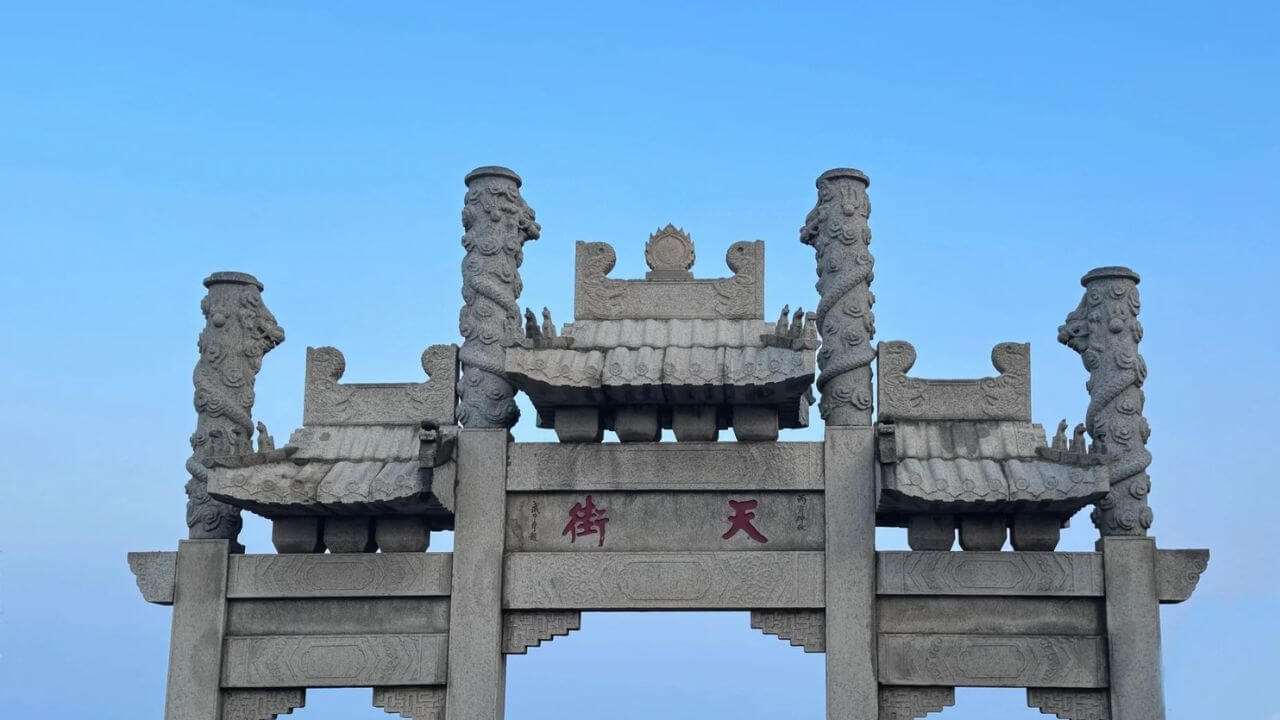
- South Gate to Heaven (Nantianmen): This gate marks the final section of the climb to the summit and is considered a threshold between the earthly and heavenly realms.
- Jade Emperor Peak (Yuhuangding): The highest point of Mount Tai, where the Jade Emperor Temple is located. Reaching this peak is seen as the culmination of the pilgrimage, representing the attainment of spiritual goals.
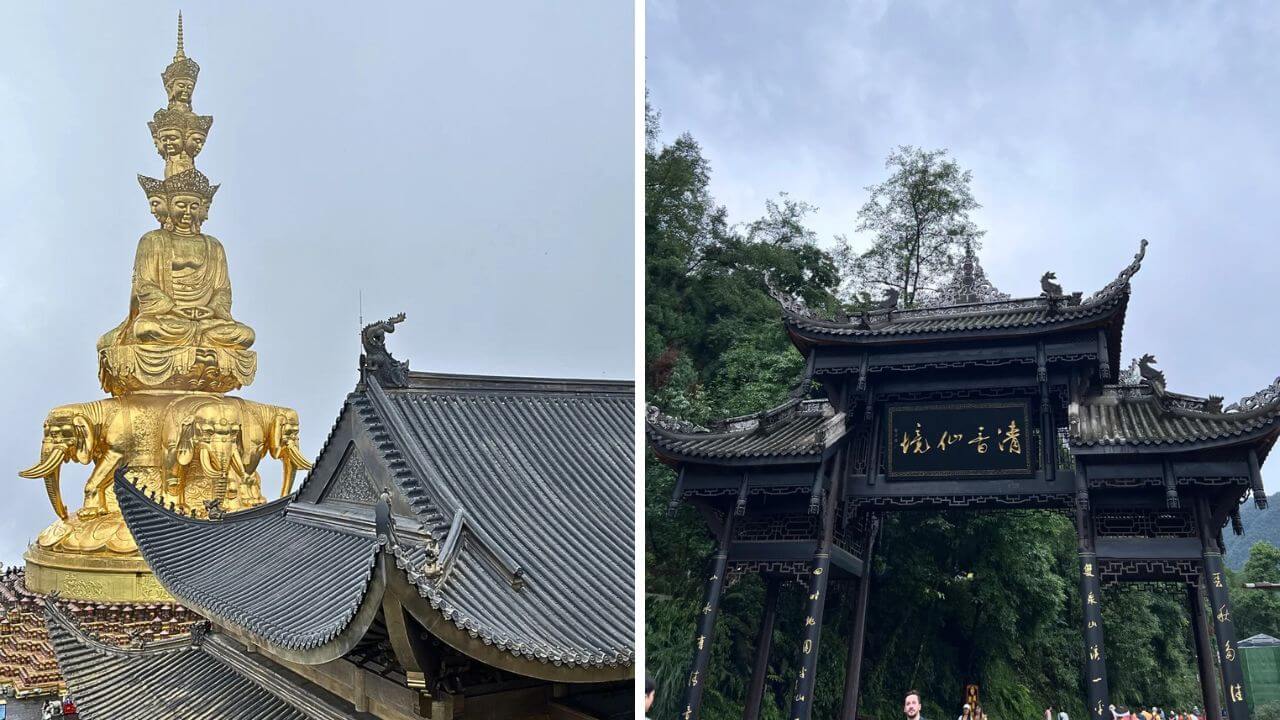
Mount Emei (Emeishan)
Mount Emei is one of the most visited sites in sacred China. It is one of the Four Sacred Buddhist Mountains of China, Mount Emei is renowned for its rich Buddhist heritage and stunning natural beauty. It is believed to be the place where Buddhism was first introduced to China.
- Location: Sichuan Province
Spiritual Significance
Bodhisattva Puxian (Samantabhadra): Mount Emei is primarily associated with the Bodhisattva Puxian, known as Samantabhadra in Sanskrit. Puxian is revered for his embodiment of Buddhist practice and virtue, particularly for his vows of benevolence and his role as a protector of the faith. Believers come to Mount Emei to seek his blessings, guidance, and protection.
Sacred Pilgrimage Site: As one of the Four Sacred Buddhist Mountains, Mount Emei is a major pilgrimage destination for Buddhists. Pilgrims visit the mountain to engage in spiritual practices, seek enlightenment, and pay homage to the numerous temples and monasteries scattered throughout the area.
Symbol of Enlightenment and Virtue: Climbing Mount Emei is seen as a metaphor for the spiritual journey towards enlightenment. The arduous trek to the summit symbolizes the believer’s dedication to overcoming life’s obstacles and achieving spiritual purity and wisdom.
Rituals and Practices
Visiting Temples and Monasteries: Pilgrims visit the many temples and monasteries on Mount Emei to pay their respects, make offerings, and engage in prayer. Key temples include the Baoguo Temple at the mountain’s base, the Wannian Temple, and the Golden Summit Temple.
Circumambulation: Walking around sacred sites, or circumambulating, is a common practice for pilgrims at Mount Emei. This act of devotion is believed to accumulate merit and bring blessings.
Meditation and Chanting: Many believers come to Mount Emei to meditate and chant Buddhist scriptures. The serene and natural environment of the mountain provides an ideal setting for these practices, helping practitioners to achieve a state of calm and spiritual focus.
Symbolic Landmarks
Golden Summit (Jinding): The Golden Summit is one of the most significant sites on Mount Emei. At 3,077 meters above sea level, it offers breathtaking views and is home to the Golden Summit Temple and the giant statue of Samantabhadra riding a white elephant. Reaching the Golden Summit is considered a high point of the pilgrimage, symbolizing the attainment of spiritual goals.
Leidongping: This area near the summit is known for its stunning sea of clouds and the majestic sunrise views. It is a popular spot for pilgrims and tourists alike, representing the beauty and tranquility of the spiritual journey.
Elephant Bathing Pool (Xixiang Chi): This site is associated with the legend of Samantabhadra’s elephant bathing in the pool. It is considered a place of purity and spiritual cleansing.
Mount Wutai (Wutaishan)
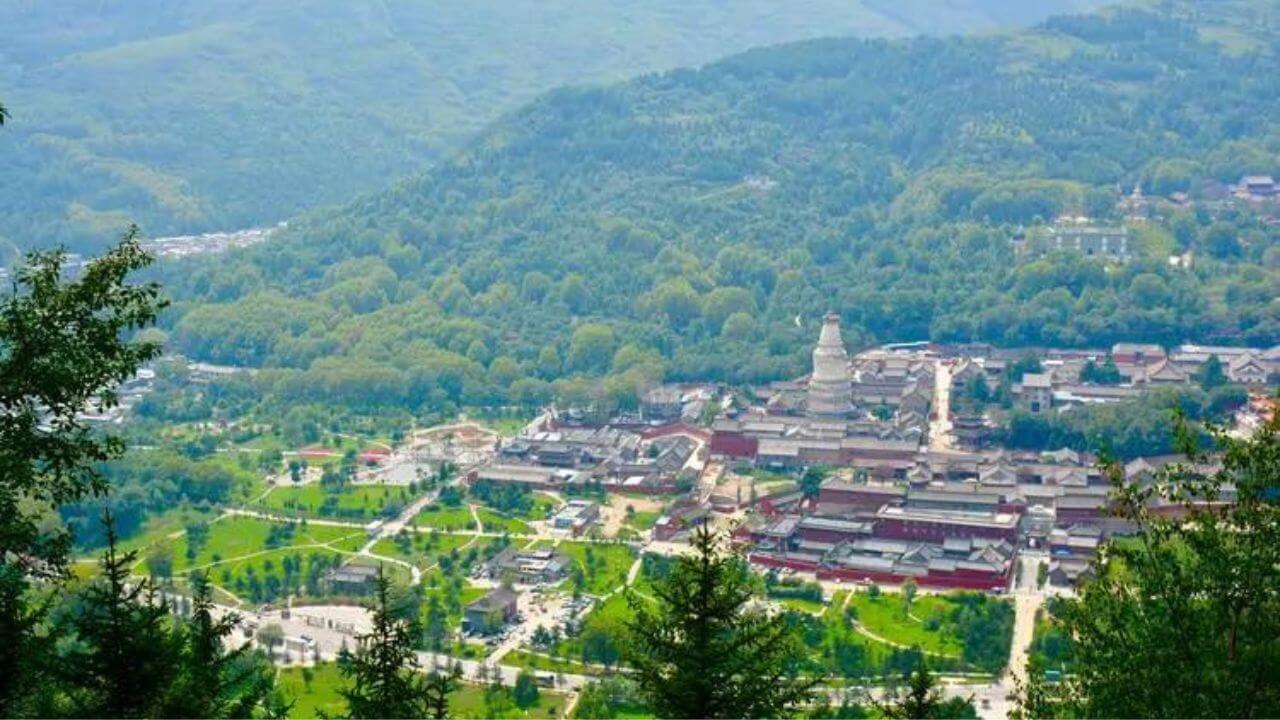
Another of the Four Sacred Buddhist Mountains, Mount Wutai is associated with the Bodhisattva Manjusri (Wenshu). It is a major center of Buddhist worship and study, and important mount for sacred China tour.
- Location: Shanxi Province
Spiritual Significance
Bodhisattva Manjusri (Wenshu): Mount Wutai is primarily associated with the Bodhisattva Manjusri, known as Wenshu in Chinese. Manjusri is the embodiment of wisdom and is often depicted holding a sword that cuts through ignorance and a sutra representing enlightened knowledge. Pilgrims come to Mount Wutai to seek wisdom, clarity of mind, and guidance from Manjusri.
Center of Buddhist Learning: Mount Wutai is a major center for Buddhist study and practice. It has been a site of pilgrimage and monastic life for over a thousand years, attracting scholars, monks, and lay practitioners from around the world.
Symbol of Enlightenment and Purity: The five terraces or peaks of Mount Wutai represent the five wisdoms of Buddhism. Climbing these peaks is seen as a journey towards enlightenment, with each peak symbolizing a step closer to spiritual purity and wisdom.
Rituals and Practices
Visiting Temples and Monasteries: Pilgrims visit the numerous temples and monasteries on Mount Wutai to offer prayers, make offerings, and seek blessings. Key temples include the Xiantong Temple, Tayuan Temple, and Pusading Temple.
Circumambulation and Prostration: Pilgrims often walk around the sacred sites, performing circumambulation, and some practice full-body prostrations as acts of devotion and humility. These practices are believed to accumulate merit and purify the mind.
Meditation and Chanting: Many believers come to Mount Wutai to meditate and chant Buddhist scriptures. The peaceful environment of the mountain provides an ideal setting for deepening one’s spiritual practice and achieving mental clarity.
Symbolic Landmarks
Five Terraces (Five Peaks): The five main peaks of Mount Wutai are named for their unique characteristics and are associated with different aspects of Manjusri’s wisdom:
- East Terrace (Wanghai Peak): This represents sight and is known for its stunning sunrises.
- West Terrace (Guayue Peak): Represents hearing and is known for its moonlit nights.
- South Terrace (Jinxiu Peak): Represents touch and is covered with beautiful flowers.
- North Terrace (Yedou Peak): Represents smell and is the highest peak, often snow-covered.
- Central Terrace (Cuiyan Peak): Represents taste and is considered the heart of the mountain.
Nanshan Temple: This temple is known for its large collection of Buddhist scriptures and statues. It is a significant site for studying and practicing Buddhism.
Tayuan Temple: Famous for its Big White Pagoda, a prominent symbol of Mount Wutai, which houses sacred relics and offers panoramic views of the surrounding area.
Xiantong Temple: One of the oldest and largest temples on Mount Wutai, it is a major pilgrimage site with numerous halls, pagodas, and statues dedicated to various Buddhist deities.
Mount Putuo (Putuoshan)
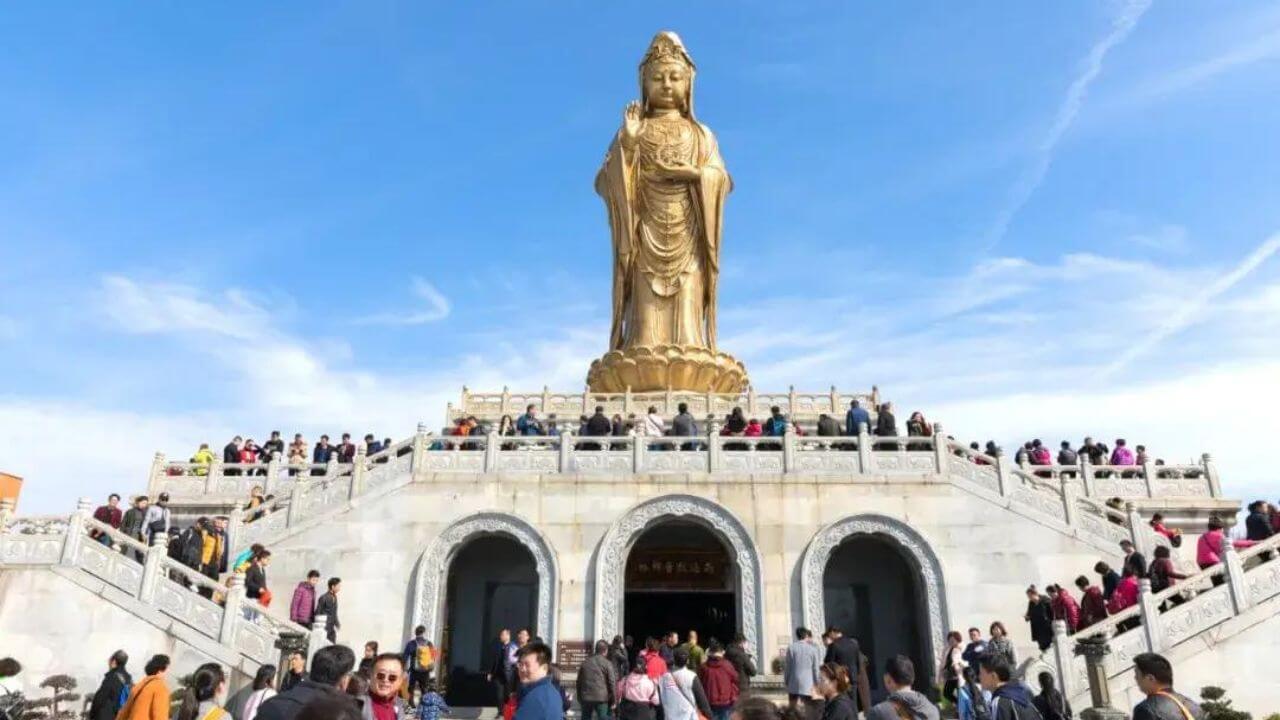
Dedicated to Guanyin, the Bodhisattva of Compassion, Mount Putuo is the third of the Four Sacred Buddhist Mountains. It is an important pilgrimage site for sacred China exploring and for those who are seeking blessings and spiritual guidance.
- Location: Zhejiang Province
Spiritual Significance
Bodhisattva Guanyin (Avalokitesvara): Mount Putuo is primarily associated with Guanyin, also known as Avalokitesvara in Sanskrit. Guanyin is the embodiment of compassion and mercy. Believers come to Mount Putuo to seek her blessings, guidance, and protection. It is believed that prayers made to Guanyin at this sacred mountain are particularly efficacious.
Symbol of Compassion and Mercy: Climbing Mount Putuo is seen as a journey towards cultivating compassion and mercy. Believers visit the mountain to develop these qualities within themselves, inspired by the teachings and example of Guanyin.
Sacred Pilgrimage Site: As one of the Four Sacred Buddhist Mountains, Mount Putuo is a major pilgrimage destination for Buddhists. Pilgrims visit the mountain to engage in spiritual practices, seek enlightenment, and pay homage to the numerous temples and shrines dedicated to Guanyin.
Rituals and Practices
Visiting Temples and Monasteries: Pilgrims visit the many temples and monasteries on Mount Putuo to pay their respects, make offerings, and engage in prayer. Key temples include Puji Temple, Fayu Temple, and Huiji Temple.
Circumambulation: Walking around sacred sites, or circumambulating, is a common practice for pilgrims at Mount Putuo. This act of devotion is believed to accumulate merit and bring blessings.
Meditation and Chanting: Many believers come to Mount Putuo to meditate and chant Buddhist scriptures. The serene and natural environment of the mountain provides an ideal setting for these practices, helping practitioners to achieve a state of calm and spiritual focus.
Symbolic Landmarks
Puji Temple: One of the largest and most important temples on Mount Putuo, Puji Temple is dedicated to Guanyin. It is known for its grand architecture and beautiful surroundings, including the Lotus Pond.
Fayu Temple: Located on the mountainside, Fayu Temple is famous for its ancient trees, stone carvings, and tranquil atmosphere. It is a major pilgrimage site where believers come to pray and meditate.
Huiji Temple: Situated on the peak of Mount Putuo, Huiji Temple offers stunning views of the island and the sea. It is a significant site for worship and reflection.
33-Meter Tall Guanyin Statue: This giant statue of Guanyin is a prominent landmark on Mount Putuo. It stands as a symbol of compassion and mercy, drawing pilgrims and tourists alike.
Purple Bamboo Forest (Zizhulin): According to legend, Guanyin once practiced here. The forest is a place of natural beauty and spiritual reflection, attracting many visitors.
Shaolin Temple
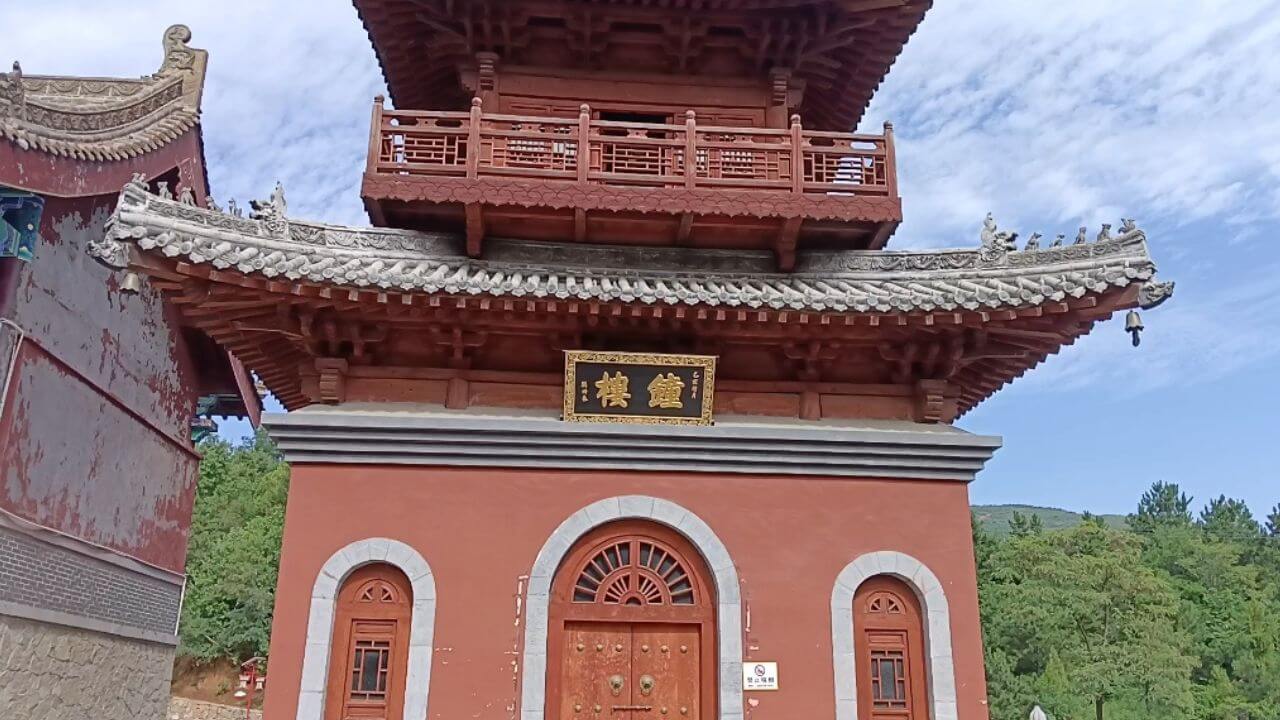
Known as the birthplace of Chinese Zen Buddhism and Shaolin Kung Fu, the Shaolin Temple is a legendary place of martial arts and spiritual training. It is one of the must-visit places when you explore sacred China.
- Location: Henan Province
Highlights
Birthplace of Zen Buddhism and Kung Fu: The temple is recognized as the origin of Chan Buddhism, a branch of Mahayana Buddhism. It is also famous for its association with Shaolin Kung Fu, a unique martial art that integrates physical prowess with Buddhist principles.
Historical and Cultural Significance: The Shaolin Temple has played a crucial role in Chinese history and culture, serving as a center for Buddhist practice, martial arts training, and education.
Martial Arts Performances: Visitors can watch spectacular martial arts demonstrations performed by skilled Shaolin monks. These performances showcase various Kung Fu techniques, weaponry, and acrobatics.
Serene Natural Setting: Nestled in the Songshan Mountains, the temple is surrounded by lush forests, ancient trees, and scenic landscapes, providing a tranquil environment for meditation and reflection.
What to Expect
- Spiritual Atmosphere: The temple maintains an atmosphere of serenity and devotion, with monks engaging in daily rituals, meditation, and martial arts practice. Visitors can experience the spiritual ambiance and observe the monastic way of life.
- Martial Arts Schools: Numerous martial arts schools are located near the temple, offering training programs for visitors interested in learning Shaolin Kung Fu. These schools provide short-term courses and long-term training opportunities.
- Interactive Experiences: Some schools and programs offer interactive experiences where visitors can participate in basic Kung Fu training sessions, allowing them to gain a deeper appreciation for the discipline and dedication required.
What to Visit
Shaolin Temple Complex:
- Main Hall (Mahavira Hall): The central hall of the temple, dedicated to the historical Buddha. It features intricate architecture and important Buddhist statues.
- Hall of Heavenly Kings: This hall houses statues of the Four Heavenly Kings, protectors of the Buddhist faith, and serves as the entrance to the main temple complex.
- Hall of Thousand Buddhas: Known for its thousand small Buddha statues and murals depicting the history of Shaolin Kung Fu.
Pagoda Forest:
- Description: Located to the west of the temple, the Pagoda Forest is a unique cemetery for Shaolin monks. It features over 200 stone and brick pagodas built between the Tang and Qing dynasties.
- Significance: Each pagoda serves as a memorial to a deceased monk, with inscriptions and carvings detailing their life and achievements.
Dharma Cave (Bodhidharma Cave):
- Description: A small cave located on the mountainside where Bodhidharma, the founder of Chan Buddhism, is said to have meditated for nine years.
- Significance: The cave is a place of pilgrimage for those seeking to connect with the origins of Zen Buddhism. It offers stunning views of the surrounding landscape.
Shaolin Zen Music Ritual:
- Description: An evening performance held in an outdoor theater near the temple, blending traditional Zen music, martial arts, and dance.
- Significance: The show provides a captivating portrayal of Shaolin culture and the spiritual essence of Zen Buddhism.
Chuzu Temple:
- Description: Also known as the First Ancestor’s Temple, it is dedicated to Bodhidharma, the first patriarch of Zen Buddhism.
- Significance: The temple houses historical relics and offers insight into the early development of Zen Buddhism in China.
Confucius Temple in Qufu
The Confucius Temple in Qufu, Shandong Province, is one of the most important cultural and historical sites in China. Dedicated to Confucius, the famous Chinese philosopher and teacher, it attracts many visitors who come to honor his legacy and explore the temple’s rich history.
- Location: Shandong Province
Significance
Cultural and Historical Importance: The Confucius Temple in Qufu is the largest and most renowned of the many Confucius temples found throughout China and East Asia. It was established in 478 BCE, shortly after Confucius’s death, making it one of the oldest and most revered sites dedicated to the philosopher.
Center of Confucianism: The temple serves as a major center for Confucianism, a philosophy that emphasizes morality, social harmony, and respect for elders. Many important rituals and ceremonies are held here, especially on Confucius’s birthday.
Architectural Masterpiece: The temple complex has been expanded and renovated many times over the centuries, creating a vast architectural masterpiece that reflects the grandeur of ancient China.
Inside the Temple
Grand Courtyards and Halls:
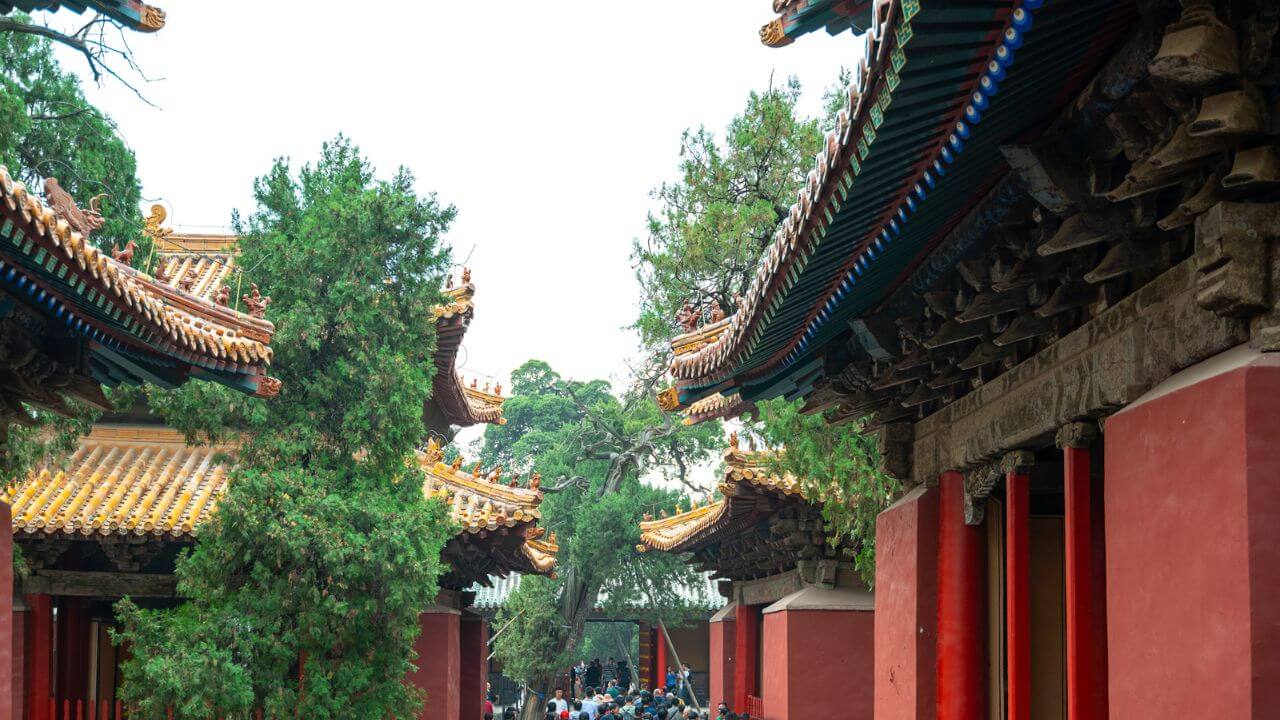
- Description: The temple complex includes multiple courtyards, grand halls, pavilions, and terraces. Visitors can walk through these spaces, each featuring intricate designs, carvings, and inscriptions.
- Atmosphere: The peaceful and respectful atmosphere is enhanced by ancient cypress trees, some over a thousand years old.
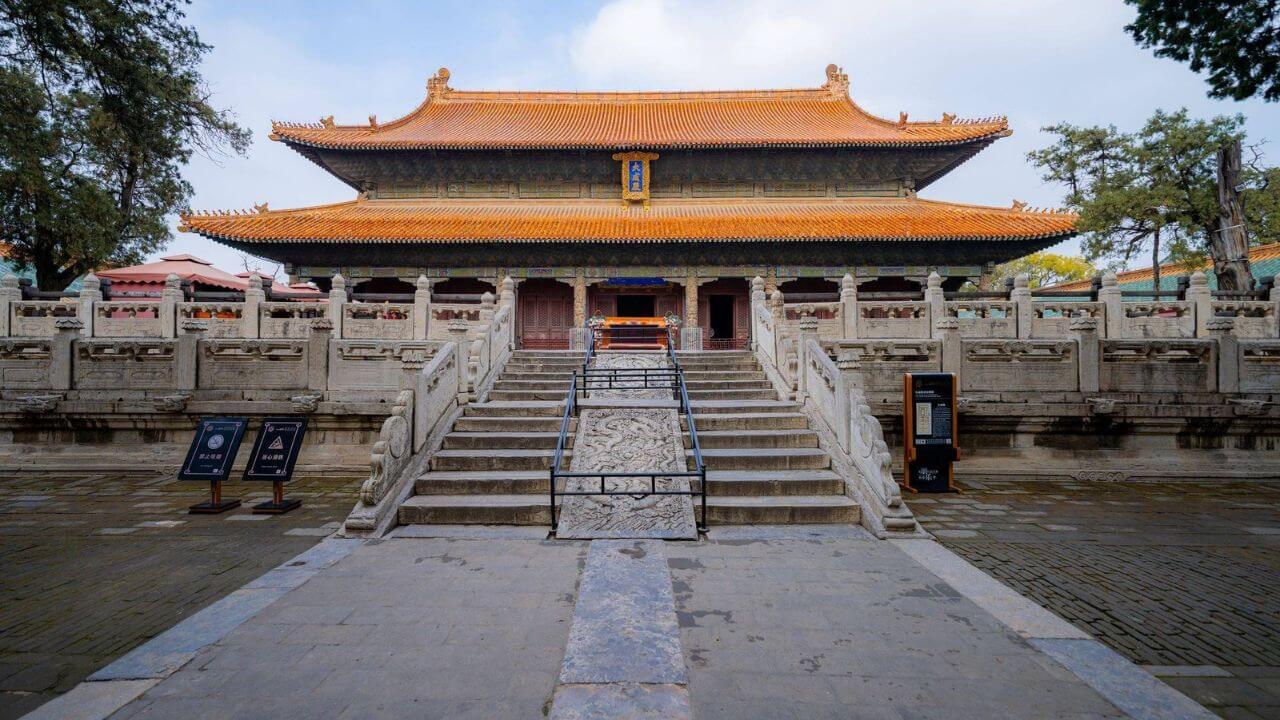
Dacheng Hall (Hall of Great Perfection):
- Description: The main hall of the temple is dedicated to Confucius. It houses a statue of Confucius and tablets with Confucian texts.
- Significance: This hall is the main place for worship and ceremonies, showing great respect for Confucius’s teachings.
Stone Steles and Inscriptions:
- Description: Throughout the temple, you’ll find many stone steles and tablets inscribed with imperial decrees, poems, and writings by scholars. These provide insight into the history and impact of Confucianism.
- Significance: The steles commemorate important events and figures in the history of Confucianism, highlighting the lasting influence of Confucius’s teachings.
Highlights
Apricot Altar (Xingtan Pavilion):
- Description: This pavilion marks the legendary site where Confucius taught his students under an apricot tree. It symbolizes Confucius’s role as a great teacher.
- Significance: It represents the importance of education and the transmission of knowledge in Confucian philosophy.
Kuiwen Pavilion:
- Description: A beautiful, multi-story structure that holds ancient texts and serves as a center for Confucian learning. The pavilion is known for its elegant architecture and richly decorated interiors.
- Significance: It underscores the value placed on scholarship and the preservation of Confucian texts.
Lingxing Gate:
- Description: The main entrance gate to the temple complex, decorated with intricate carvings and symbols. Passing through this gate is an important ritual for visitors.
- Significance: The gate marks the transition from the ordinary world to the sacred space dedicated to Confucius.
Confucius Mansion (Kong Family Mansion):
- Description: Located next to the temple, the Confucius Mansion was the home of Confucius’s descendants. It includes many rooms, courtyards, and gardens.
- Significance: The mansion offers insight into the lifestyle and status of Confucius’s family, who played important roles in Chinese society.
Confucius Cemetery (Kong Lin):
- Description: A large cemetery where Confucius and his descendants are buried. The site includes over 100,000 tombstones and burial mounds.
- Significance: Pilgrims visit the cemetery to pay respects to Confucius and his family, making it an important site for ancestor worship.
Wudang Mountains
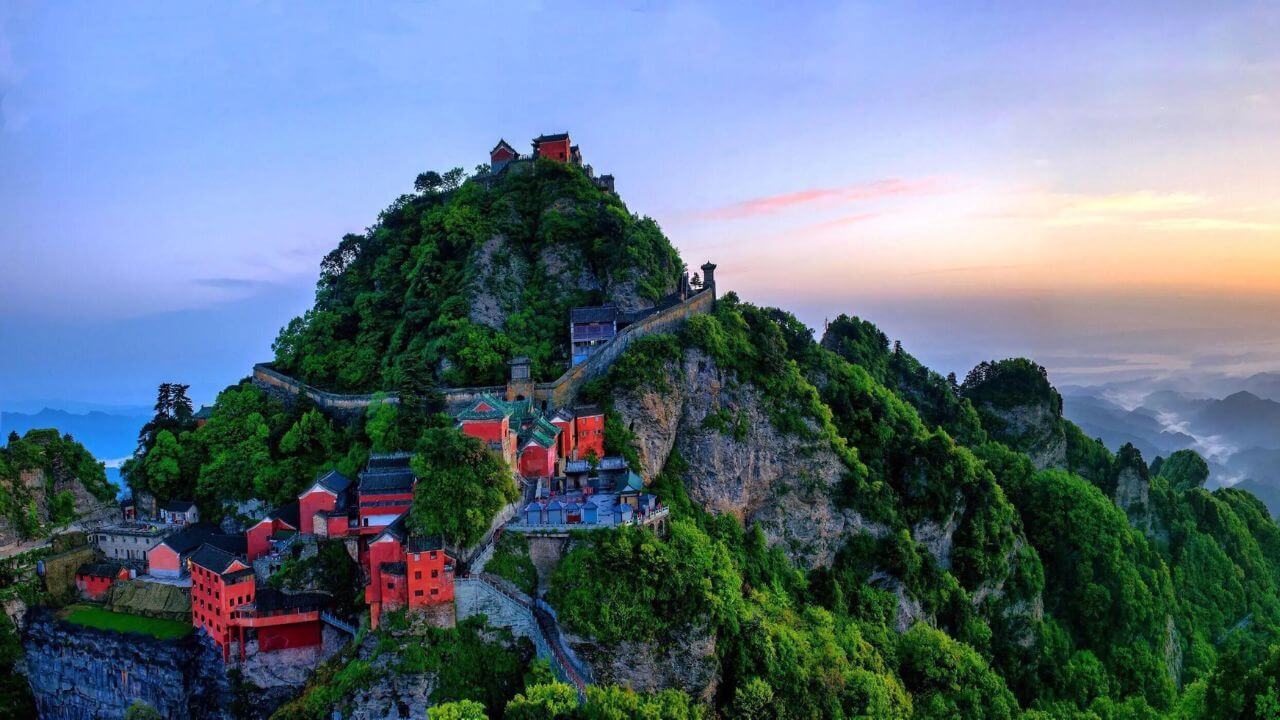
The Wudang Mountains, located in Hubei Province, are one of China’s most important spiritual and cultural sites. Known for their beautiful landscapes and rich history, they are a major center for Taoism and martial arts, particularly Tai Chi. I advise you to visit when you are on a tour in sacred China.
- Location: Hubei Province
Significance
Center of Taoism: The Wudang Mountains are a sacred site for Taoism, one of China’s major religions. They are believed to be the birthplace of Tai Chi and are home to numerous Taoist temples, monasteries, and academies.
Historical and Cultural Heritage: The mountains have a long history of Taoist practice dating back to the Tang Dynasty. Over the centuries, they have attracted many Taoist practitioners and scholars, becoming a hub of spiritual learning and martial arts.
UNESCO World Heritage Site: Recognized for their cultural, architectural, and historical value, the Wudang Mountains were designated a UNESCO World Heritage Site in 1994.
What to Expect
Spiritual Atmosphere: Visitors can experience the deep sense of spirituality and peace that pervades the Wudang Mountains. The area is known for its tranquil environment, perfect for meditation and reflection.
Martial Arts Training: The mountains are famous for their martial arts schools, where visitors can watch or even participate in Tai Chi and other martial arts training sessions.
Natural Beauty: The Wudang Mountains are known for their stunning scenery, including lush forests, ancient trees, and mist-covered peaks. The natural beauty of the area complements its spiritual significance.
Highlights
Golden Hall:
- Description: The Golden Hall is one of the most famous structures in the Wudang Mountains. Made entirely of bronze and gilded with gold, it sits atop Tianzhu Peak, the highest peak in the range.
- Significance: The hall houses statues of Taoist deities and is a major pilgrimage site for Taoist practitioners.
Purple Cloud Temple (Zixiao Gong):
- Description: One of the largest and most important temples in the Wudang Mountains, the Purple Cloud Temple is known for its beautiful architecture and serene setting.
- Significance: The temple is dedicated to Xuan Wu, a major deity in Taoism, and is an important site for Taoist rituals and ceremonies.
Nanyan Temple:
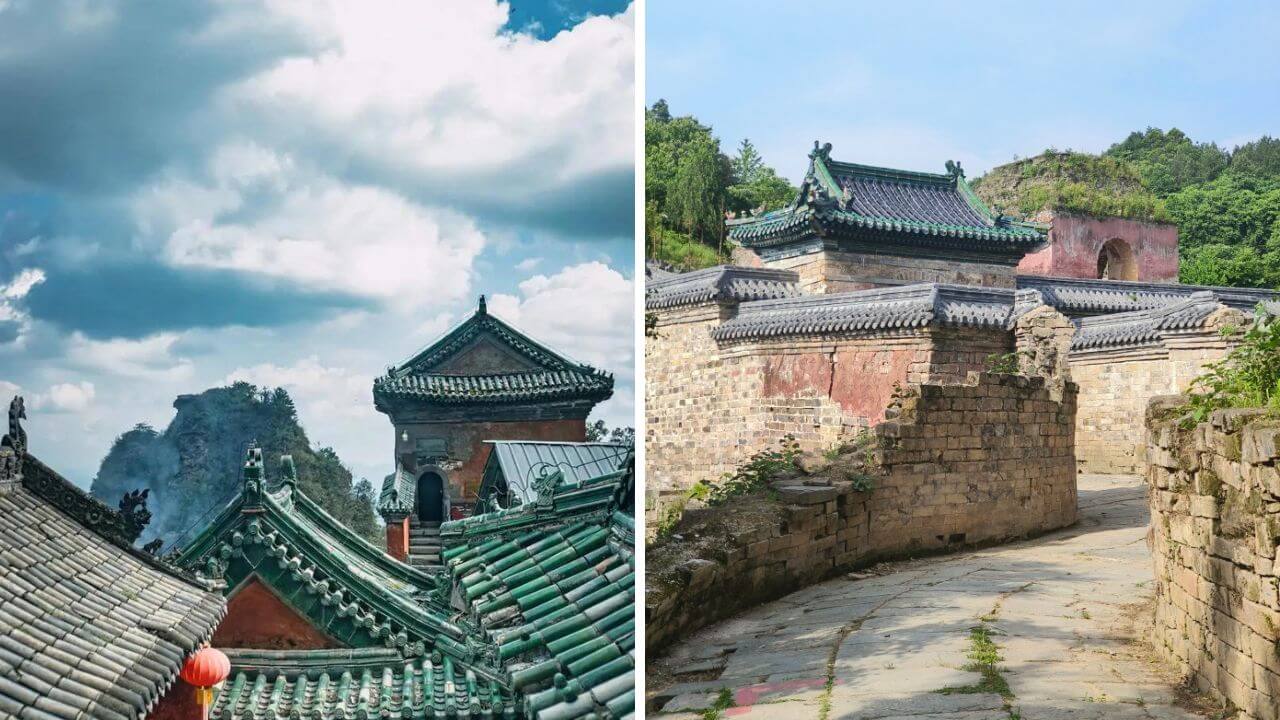
- Description: Built on a cliff, Nanyan Temple offers spectacular views and is known for its unique construction. The temple is also famous for its dragon head incense burner.
- Significance: It is considered one of the most sacred spots in the Wudang Mountains, believed to be a place where gods descend to earth.
Yuxu Palace:
- Description: Although mostly in ruins, Yuxu Palace is an important historical site. It was once the largest Taoist complex in the Wudang Mountains.
- Significance: The palace’s remains are a testament to the architectural grandeur and historical significance of the Wudang Mountains.
Prince Slope (Fuzhenguan):
- Description: A temple complex located on a steep slope, Prince Slope is known for its beautiful pavilions, halls, and the famous “Dragon and Tiger” statues.
- Significance: It is associated with the legend of a prince who became a Taoist immortal.
Tai Chi Practice:
- Description: The Wudang Mountains are renowned as the birthplace of Tai Chi. Visitors can observe or participate in Tai Chi sessions conducted by skilled practitioners.
- Significance: Practicing Tai Chi in its birthplace offers a unique and deeply enriching experience.
China captures the rich spiritual and cultural legacy that has shaped the country for thousands of years. From the towering peaks of Mount Tai to the serene waters of West Lake, China’s sacred sites offer a journey through history, spirituality, and natural beauty. These revered locations—whether ancient temples, peaceful monasteries, or majestic mountains—demonstrate the deep connection between the land and its people. Exploring Sacred China is a journey through a civilization’s heart, where the past and present blend in a timeless story of devotion, tradition, and breathtaking landscapes.

Helen Wang
Travel Advisor & Guide Expert
I started my travel career in 2005 and have since become an expert in Tibet and China’s travel destinations and helping travelers plan unforgettable trips.
For expert travel advice to China or Tibet, feel free to contact me.